The Admin Console is only available to Org Admins. Open it from your profile menu (the round icon at the top right of the screen) by selecting Admin console.
What you can do in the Admin Console
| Tab | What it’s for |
|---|---|
| Configuration | Workflow level names, default date, number and currency formats, custom workspace groups, offices, site types, approval types, stakeholder types and reporting periods for aggregated indicators |
| Users | Invite, manage and deactivate users, and assign Org Admin rights |
| User authentication | Multi-factor authentication and Microsoft Azure sign-in. See Configuring Multi-Factor Authentication |
| Organisation details | Organisation, subscription, contact and IATI details |
| Exports | Organisation-wide data exports, including IATI and customised exports |
| Styles | Custom colour styles for dashboards. See Creating Custom Colour Styles |
| Workspace status and Workspace stage | Custom status and stage labels for workspaces. See Workspace Status, Stage and Groups |
| Change log settings | Turn on and configure the change log. See Activating Change Log |
| Disaggregation types and Reporting periods | Define disaggregation types and reporting periods that can be used across all workspaces |
How to manage users
Invite new users: on the Users tab, click Invite user(s), enter their email address and click Add. The user receives an email inviting them to set up their TolaData account.
Org Admin: to give a member of your organisation Org Admin rights, tick the column next to their name. You can have several Org Admins. The difference between Org Admins and Org Users is explained in Manage team members.
Deactivate users: you can deactivate users who have accepted their invitation and set up their account. An active user has an orange tick. Untick the box to deactivate the user and confirm the warning message.
How to configure your organisation’s settings
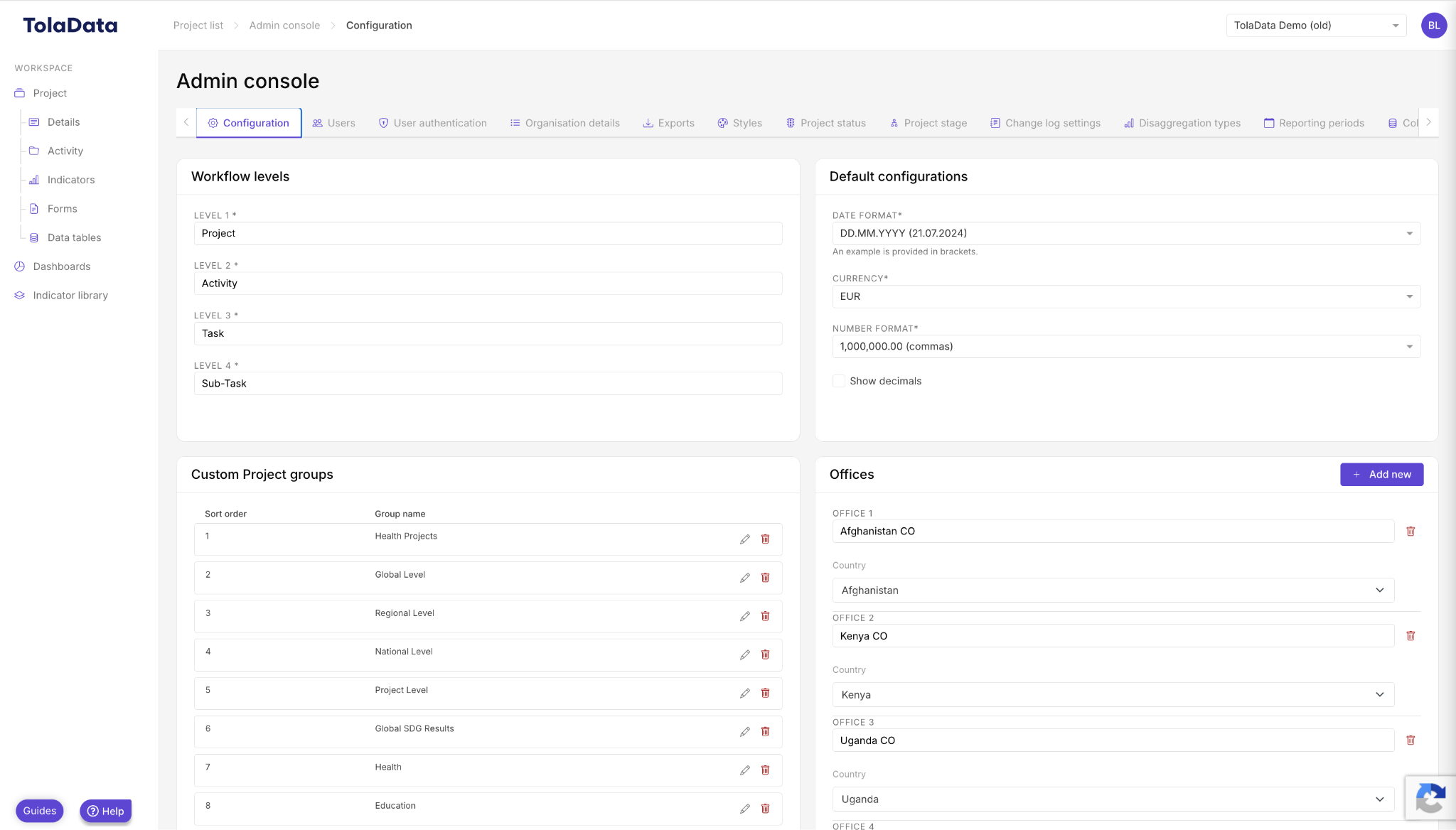
Workflow levels: the workflow levels are named “Workspace”, “Activity” and “Task” by default. If your organisation uses different terms, for example “Programme” instead of “Workspace”, edit the names and click Save. These names are not translated when a user switches their profile to another language.
Default configurations: set the default date format, number format and currency. These apply to all users in your organisation.
Custom workspace groups: create groups to organise your workspaces, then assign a workspace to a group on its Details tab.
Approval types: set the approval types users can choose when they create an approval in the activity section. Click Add new, enter the name and click Save.
Offices: set the offices users can choose when they create a site, to show which office manages it. This is useful for large organisations with many field offices. Click Add new, enter the office name and country, and click Save.
Site types and stakeholder types: set the options users can choose when they create a site or a stakeholder.
Aggregated indicators reporting periods: link reporting period types to all existing and future aggregated indicators in the organisation unit.
User authentication
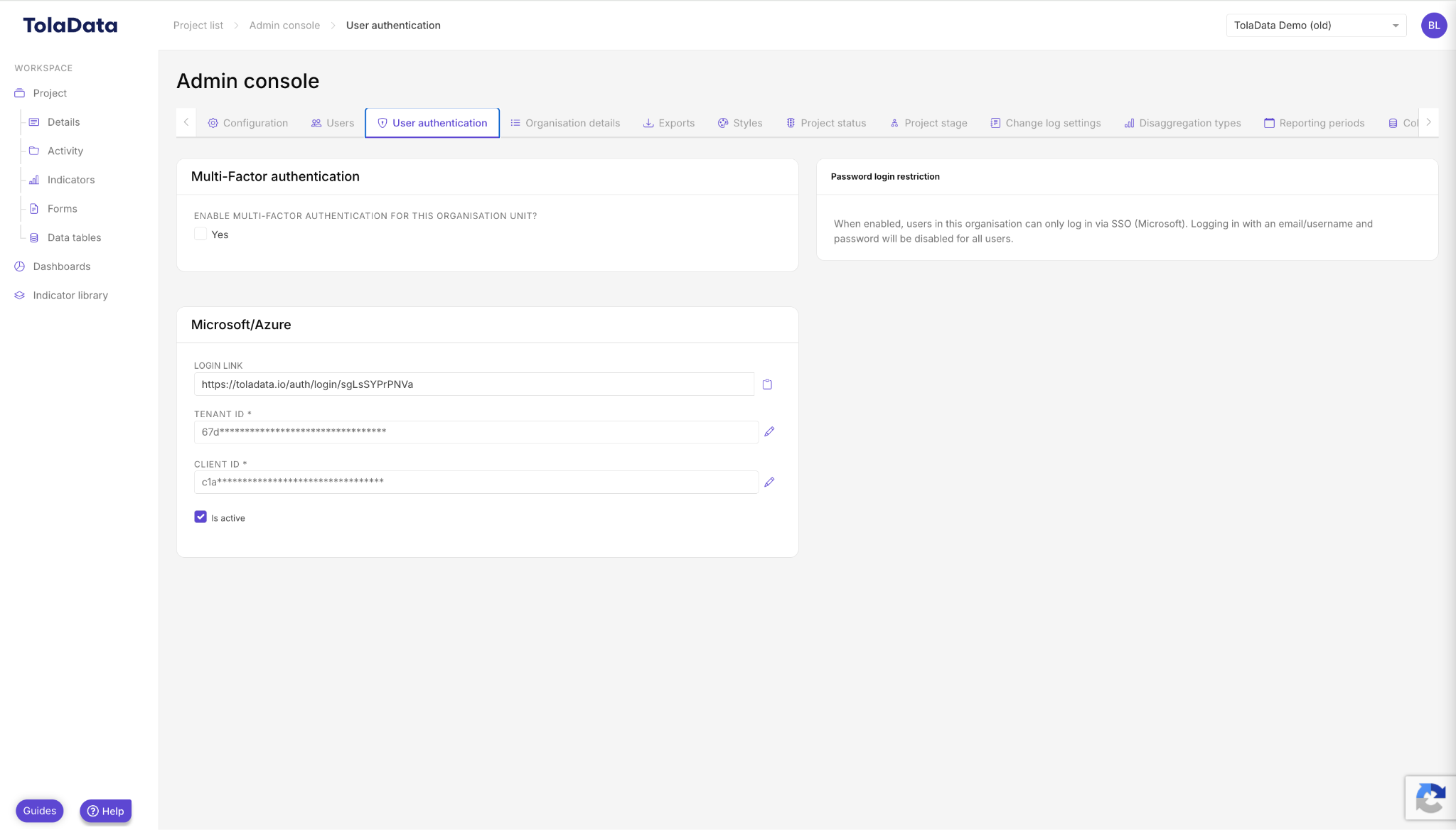
Org Admins can make multi-factor authentication mandatory or optional, choose the supported authenticator apps (Microsoft, Google and LastPass), set how often users must verify, and connect Microsoft Azure Active Directory.
Workspace status and stage
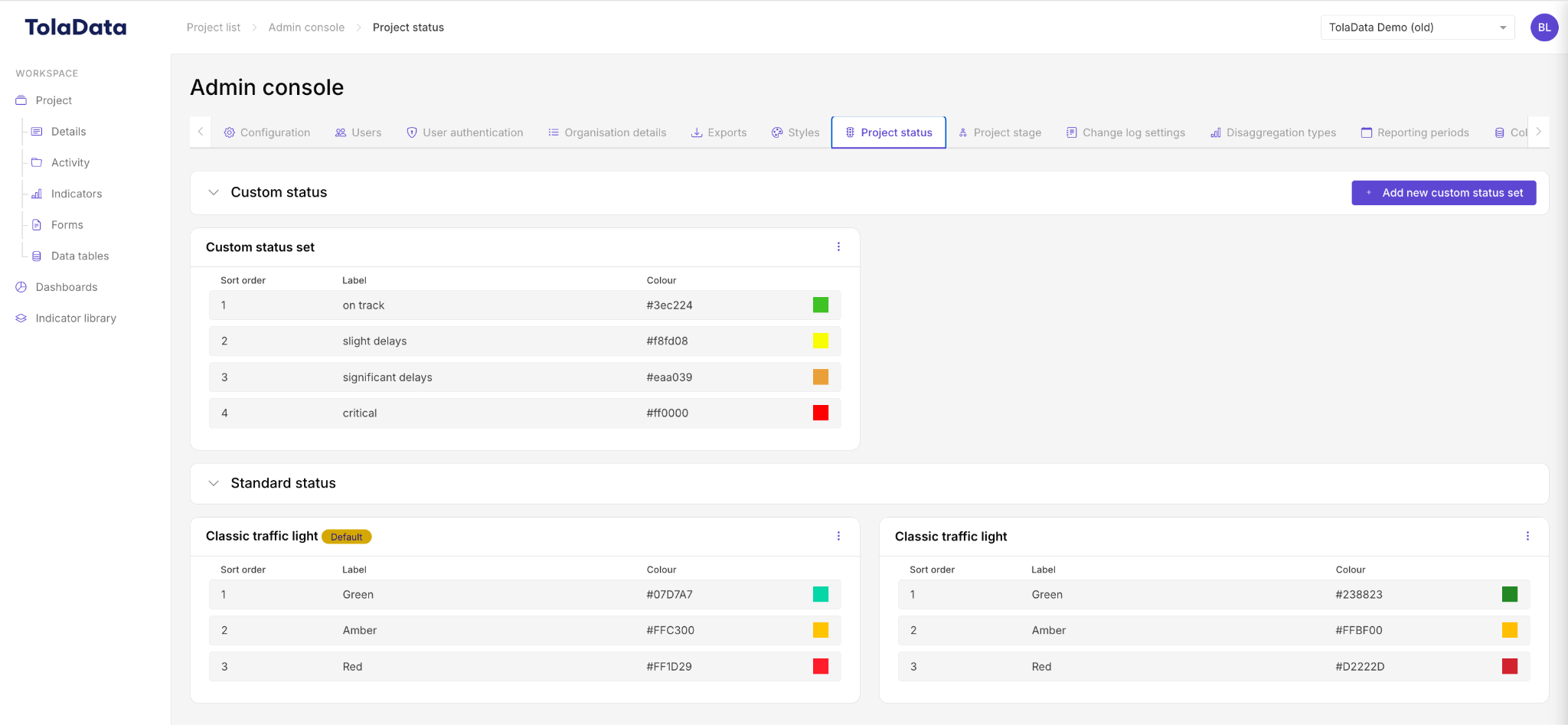
Create custom status options beyond the standard traffic lights, and custom stages to label workspaces. The IATI standard stages are available by default. The workspace list can then be filtered by group, stage and status.
How to export your organisation’s data
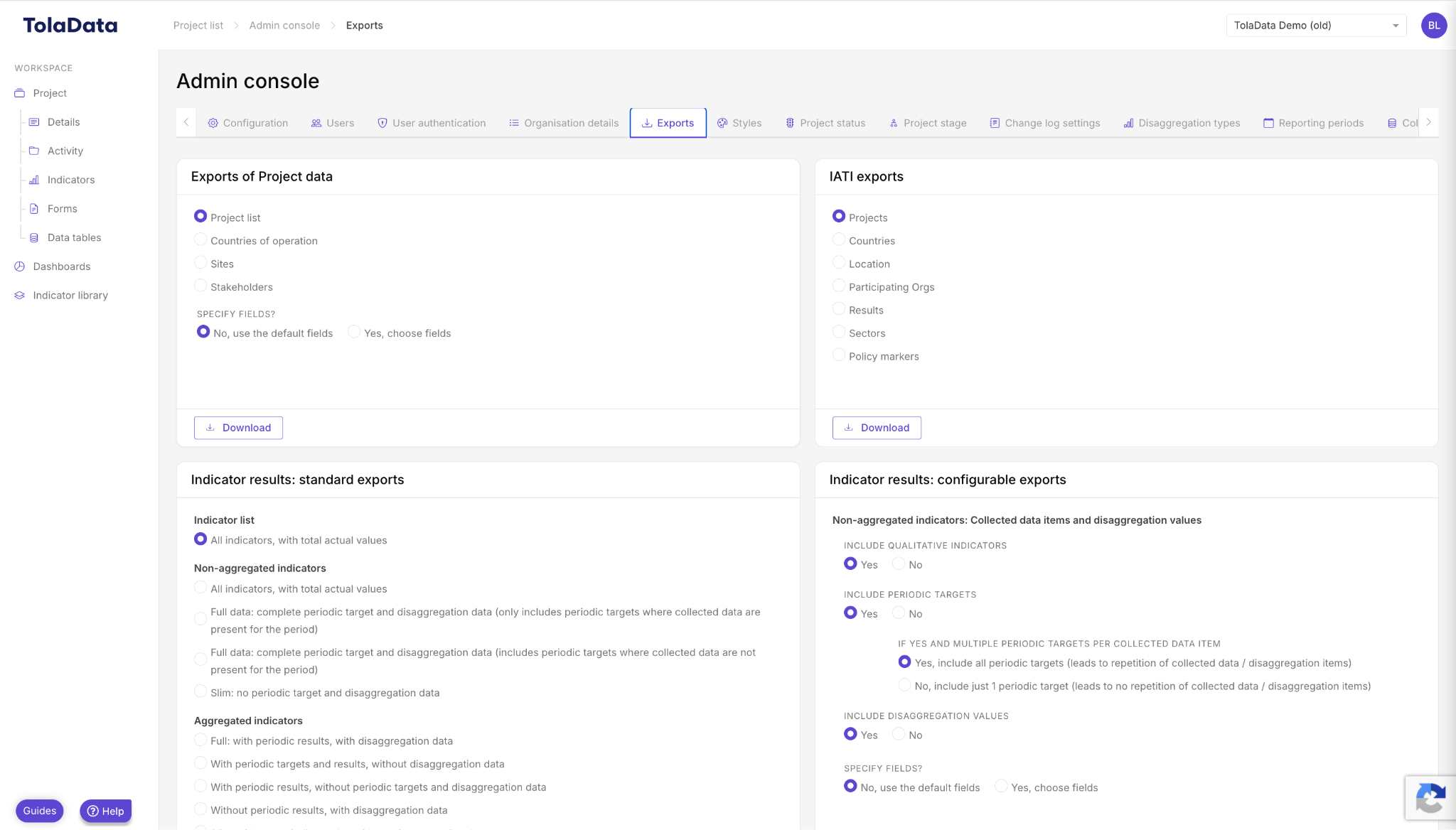
On the Exports tab you can export the full organisation database in CSV or Excel format, including standard and configurable indicator-results exports, IATI exports and customised exports. Exports cover:
- All workspaces and their details
- All workspace indicator plans and results
- All workspace implementing locations
- All workspace stakeholders
For tips on opening exported files in Excel, see Formatting Exported Data.