When you create a new indicator, you have the option to select a checkbox to make it an aggregating indicator. This means that this indicator will combine results in real-time from contributing indicators that you link from within that workspace or from other workspaces. This means one workspace can hold the overarching programme results framework, while contributing workspaces keep their own indicator plans and targets and link upwards, from workspace to country to programme or organisation level.
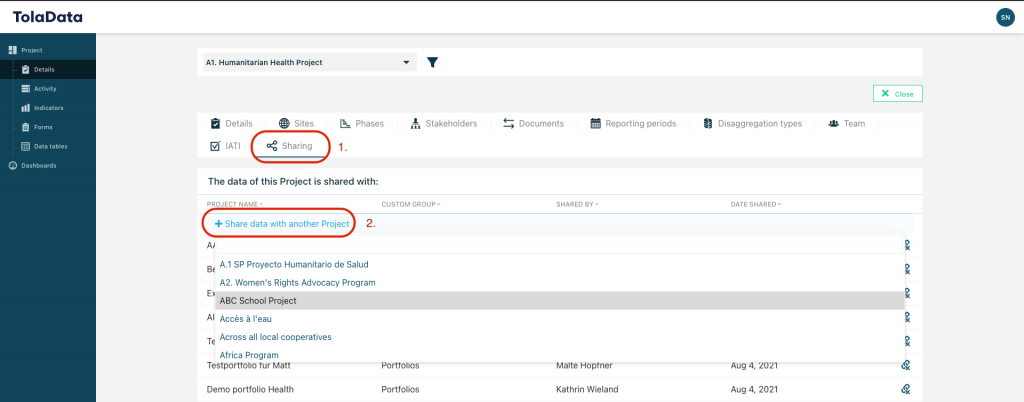
To ensure you have control over who can access data, workspaces must share their data with the lead workspace in which you want to aggregate results. Open the workspace, go to Details and select the ‘Sharing’ tab. Click ‘Share data with another project’ to select the workspace to share with. Only indicators from a workspace that shares data with the lead workspace can be linked as contributing indicators.
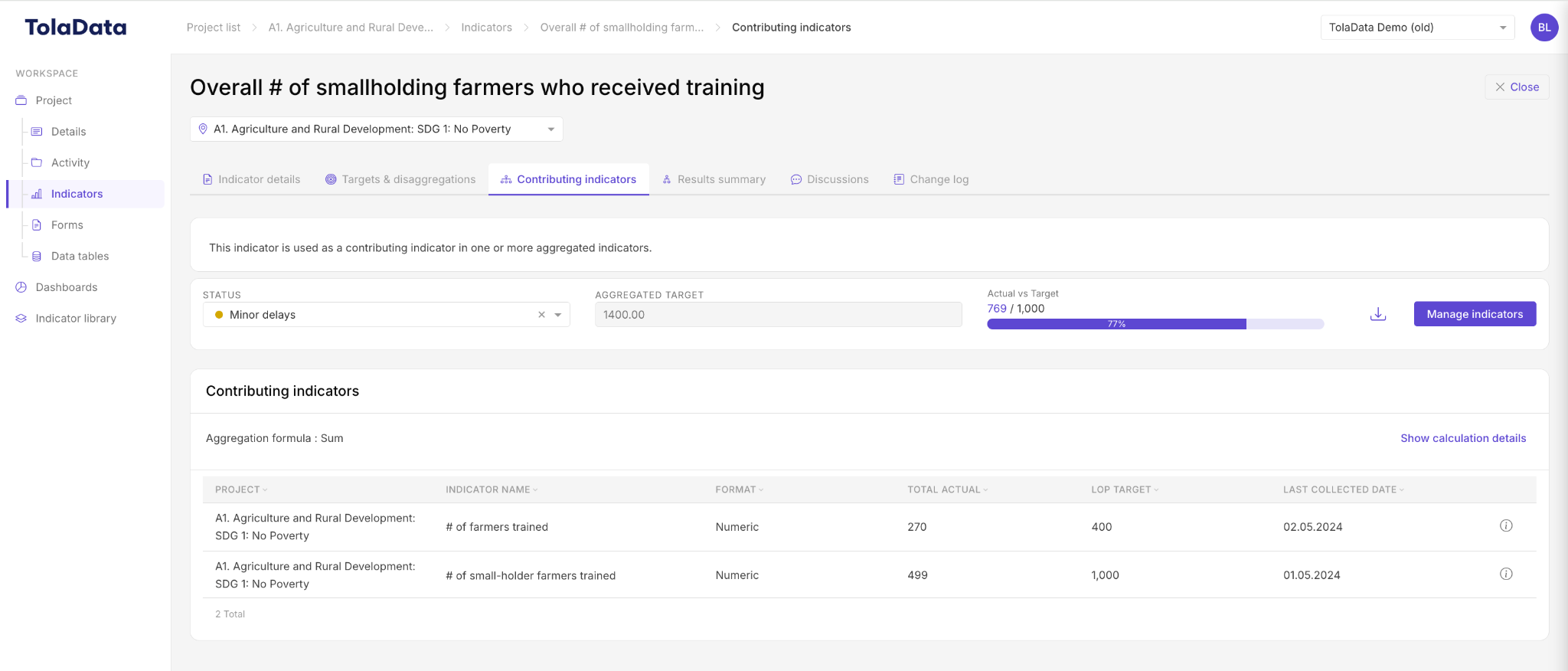
To add contributing indicators to an aggregating indicator, first click the name of your indicator. Next, click the ‘contributing indicators’ tab and the green ‘Add indicators’ button.
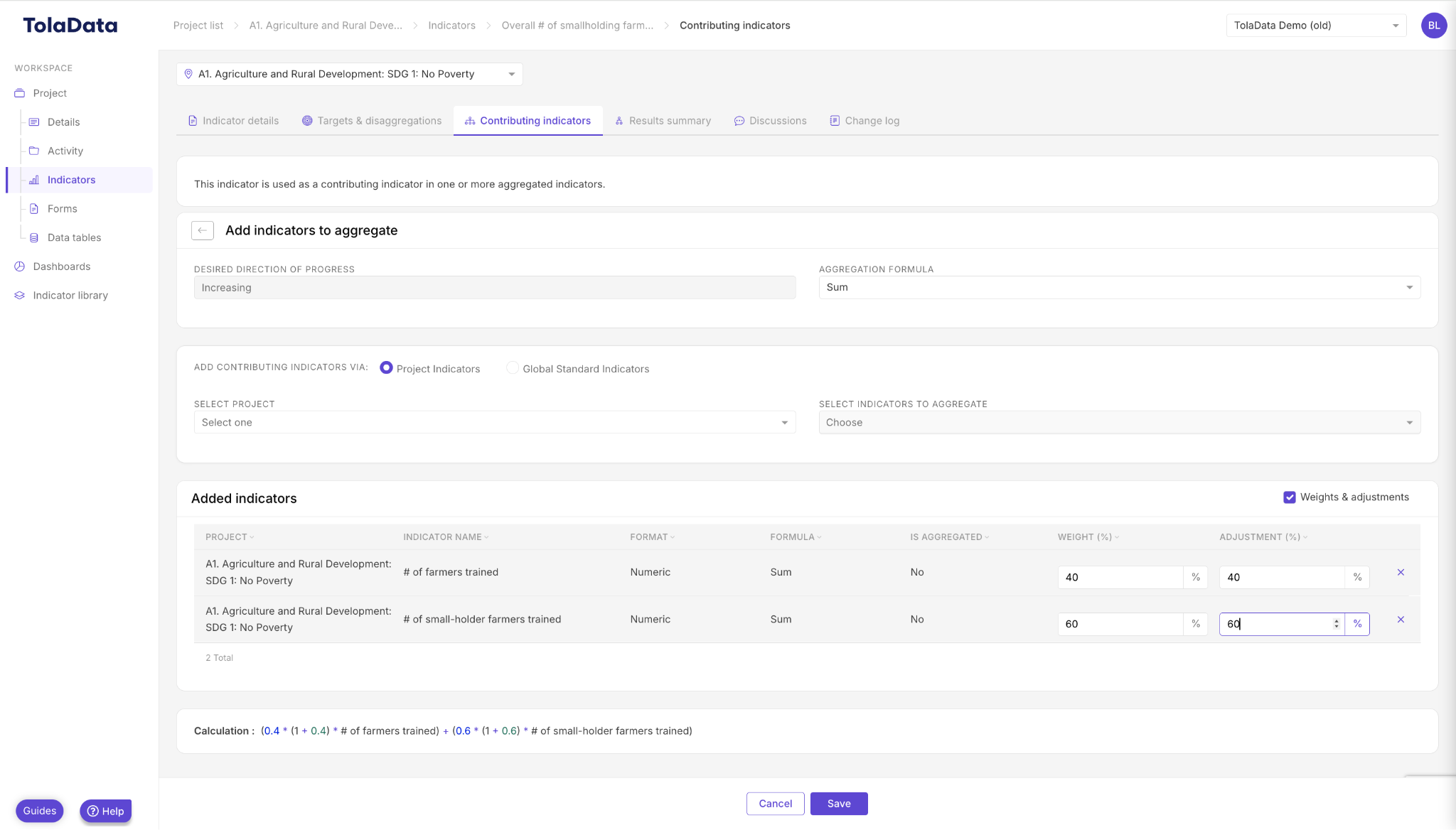
Use the drop-down lists to select the workspace from which you want to take indicators, and the indicators you want to aggregate. Finally, click ‘add indicators to list’ and then ‘Save’.
Aggregation formulas and real-time updates
You can combine contributing results using sum, subtraction, multiplication, average or division. Contributing indicators can also be weighted or adjusted. Results update in real time: as soon as a contributing workspace adds a result, every related aggregated indicator updates.
To see how aggregated results develop over time, including by disaggregation, see Analysing Aggregated Indicators Over Time. To stop the same value being counted twice, turn on duplication tracking.